Fielder Mountain Fire Reaches 29% Containment; Evacuations Canceled
Crews shift toward daytime mop-up as work pushes deeper into the 573-acre fire.
Fire Facts
Fire Name:
Fielder Mountain Fire
Location:
West of Rogue River, Ore.
Size: 573 acres
Containment: 29%
Activity:
Crews are continuing mop-up, with work extending 100 to 300 feet into burned areas near structures.
Start Date:
Thursday, Aug. 13, 2026
Cause:
Vehicle-related; specific circumstances remain under investigation.
Personnel:
681 firefighters and support personnel
Resources:
22 hand crews
26 engines
12 heavy equipment
15 water tenders
10 aircraft
Aircraft Support:
375,130 gallons of water dropped by helicopters during the first two days, plus more than 20,000 gallons delivered to portable tanks Saturday.
Evacuations:
All evacuation levels have been canceled.
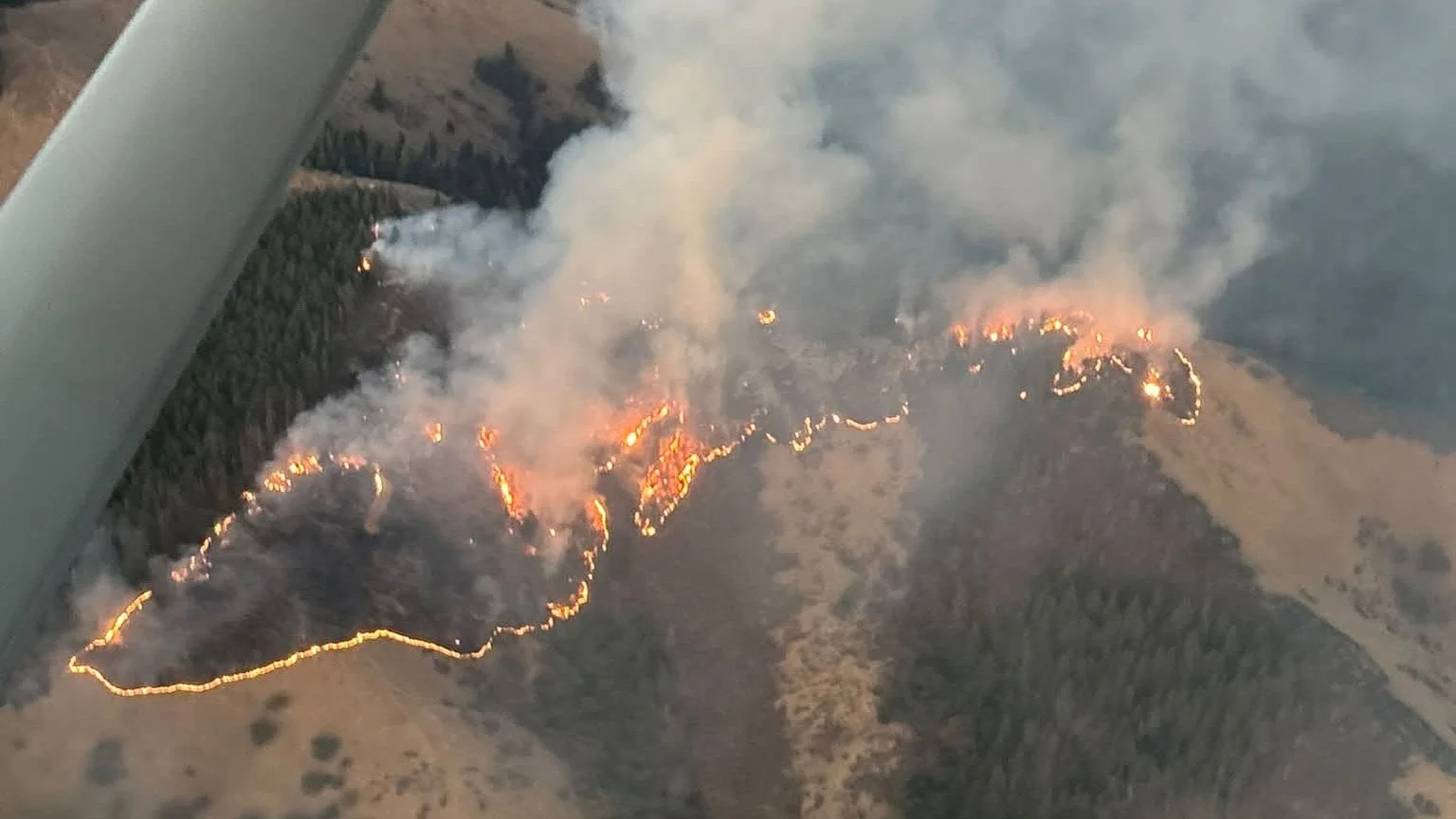
Cover Photo, Burned Hillside: A view across burned terrain on the Fielder Mountain Fire shows the steep slopes where crews continue mop-up and hazard-tree work above the Rogue River area. Oregon Department of Forestry.
ROGUE RIVER, Ore. — All evacuation levels surrounding the Fielder Mountain Fire have been canceled as containment continues to increase and firefighters push mop-up deeper into the 573-acre fire west of Rogue River.
The Jackson County Sheriff’s Office canceled the remaining evacuation levels Monday for zones JAC-052 and ROR-053. No evacuation zones remain active for the Fielder Mountain Fire.
Drone Infrared Map: An Aug. 17 UAS infrared survey maps approximately 575 acres and shows remaining heat sources throughout the Fielder Mountain Fire. ODF continues to report the official fire size at 573 acres. The map also shows the 100-foot mop-up buffer being used to guide crews. Rogue Reconnaissance / UAS Wildland Fire Collaboration.
Containment has increased to 29%, according to Oregon Department of Forestry Complex Incident Management Team 1.
The improving fire status is also changing how firefighters are staffing the incident. Rather than maintaining the heavy overnight response used during the fire’s earlier stages, crews are increasingly being shifted to daytime operations, when mop-up can be done more safely and efficiently.


ODF Operations Section Chief Kyle Gibbons said several crews worked shorter evening shifts Sunday before resting and returning for Monday’s day shift. Similar transitions are expected over the next several evenings as conditions allow.
Resources are not yet being released simply because of the shift.
With containment still at 29%, firefighters will remain assigned where needed while managers gradually adjust staffing as confidence in the perimeter grows.
Mop-Up Pushes Deeper Into Fire
The depth of mop-up now varies considerably around the perimeter.
In Division W, where homes and other infrastructure were among the first priorities during suppression, crews have worked approximately 100 to 300 feet into the burned area.
In Division C, mop-up is generally around 50 feet deep, with some portions reaching approximately 100 feet.
Division G remains more challenging. Heavier fuels and the fact that it was among the last portions of the fire to receive control line mean crews are still working toward approximately 50 feet of mop-up, with a goal of pushing toward 100 feet where conditions allow Monday.
Crews in Division L are also working toward approximately 100 feet of mop-up.
The work involves hand crews moving systematically through the burned area with hose lays, extinguishing remaining heat in places fire engines cannot reach.
Thermal imaging cameras and infrared-equipped drones are helping firefighters identify hotspots that may be difficult to see during daylight, allowing crews to concentrate water and digging where heat remains.
Hazard Trees Cleared Ahead of Crews
Timber fallers are moving ahead of mop-up crews to remove trees and snags that could fall onto firefighters working inside the perimeter.
The first priority is removing hazardous trees within roughly 100 to 200 feet of the fireline. Fallers then work farther into the burned area, targeting hazards within approximately 500 feet where needed to create a safer working environment.
That approach allows hand crews to move progressively farther into the fire while reducing one of the more persistent hazards on the steep slopes.
Fire managers said most of the perimeter is looking good Monday, with the greatest confidence along areas closest to homes and other values that firefighters prioritized early in the incident.
Helibase Operations: Helicopters and support equipment are staged at a helibase near the Fielder Mountain Fire, where aircraft remain available for water delivery, reconnaissance, and other suppression needs. Oregon Department of Forestry.
375,000+ Gallons of Water
Aircraft have played a significant role in the Fielder Mountain Fire response, particularly in terrain that is difficult for ground equipment to reach.
ODF reports helicopters dropped 238,080 gallons of water Thursday and another 137,050 gallons Friday, totaling 375,130 gallons during the first two days of the fire.
Helicopters have also been used to attack hotspots, cool burning trees, provide aerial reconnaissance, and move water into areas inaccessible to water tenders. On Saturday, helicopters delivered more than 20,000 additional gallons to portable tanks near the top of the fire, supplying hose lays used by crews working the steep terrain.

During the initial attack, three large air tankers also delivered 21 loads of retardant around the fire’s edge, slowing its spread while firefighters built more permanent control lines.
A total of 681 personnel remain assigned to the fire, including 22 hand crews, 26 engines, 12 pieces of heavy equipment, 15 water tenders, and 10 aircraft.
The fire remains mapped at 573 acres.
With evacuations now canceled and containment continuing to rise, Monday’s work is increasingly about turning a secured perimeter into a deeper, colder buffer — finding the remaining heat, removing hazards, and steadily working farther into the burned ground.


Keep Reading