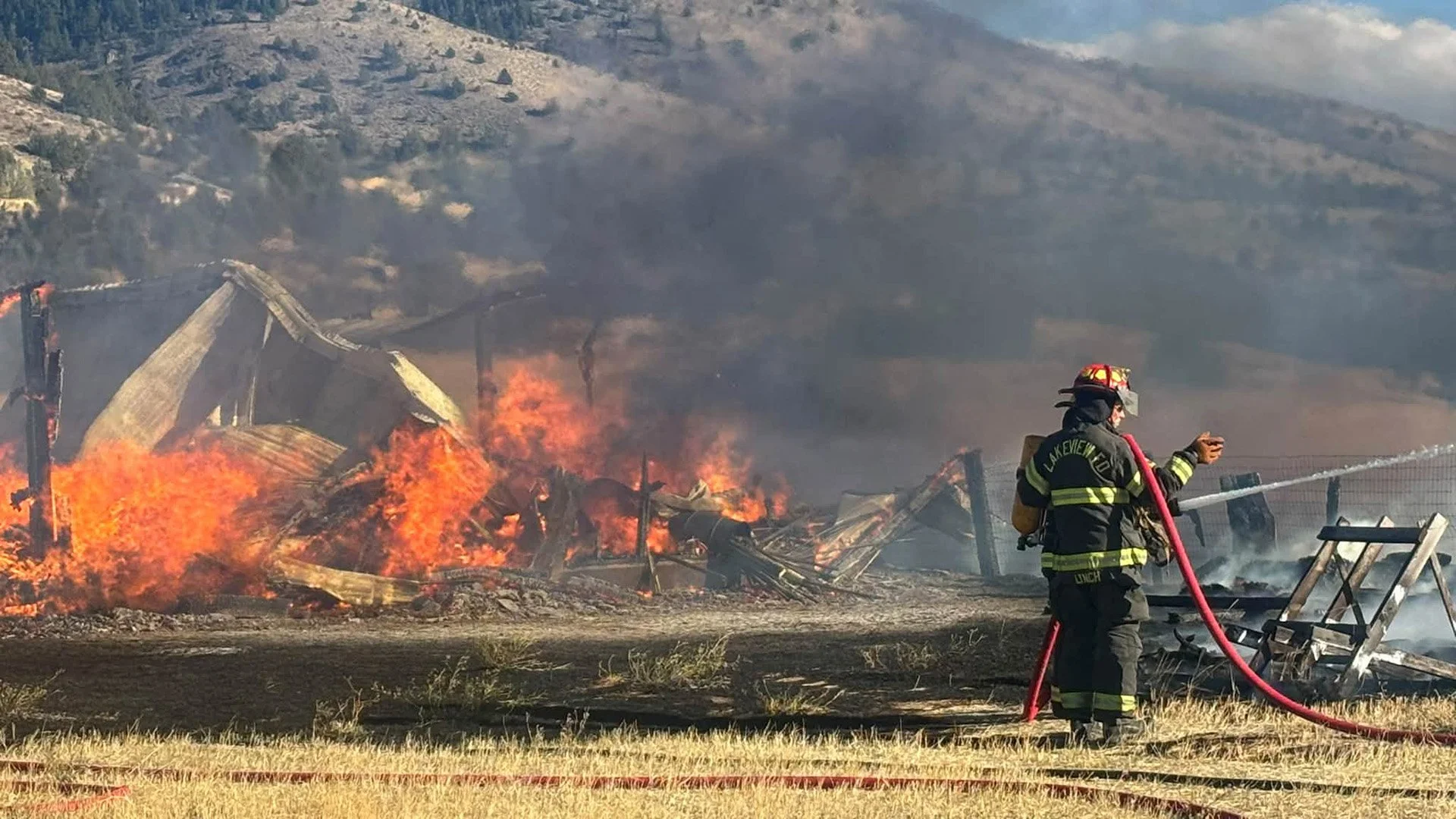
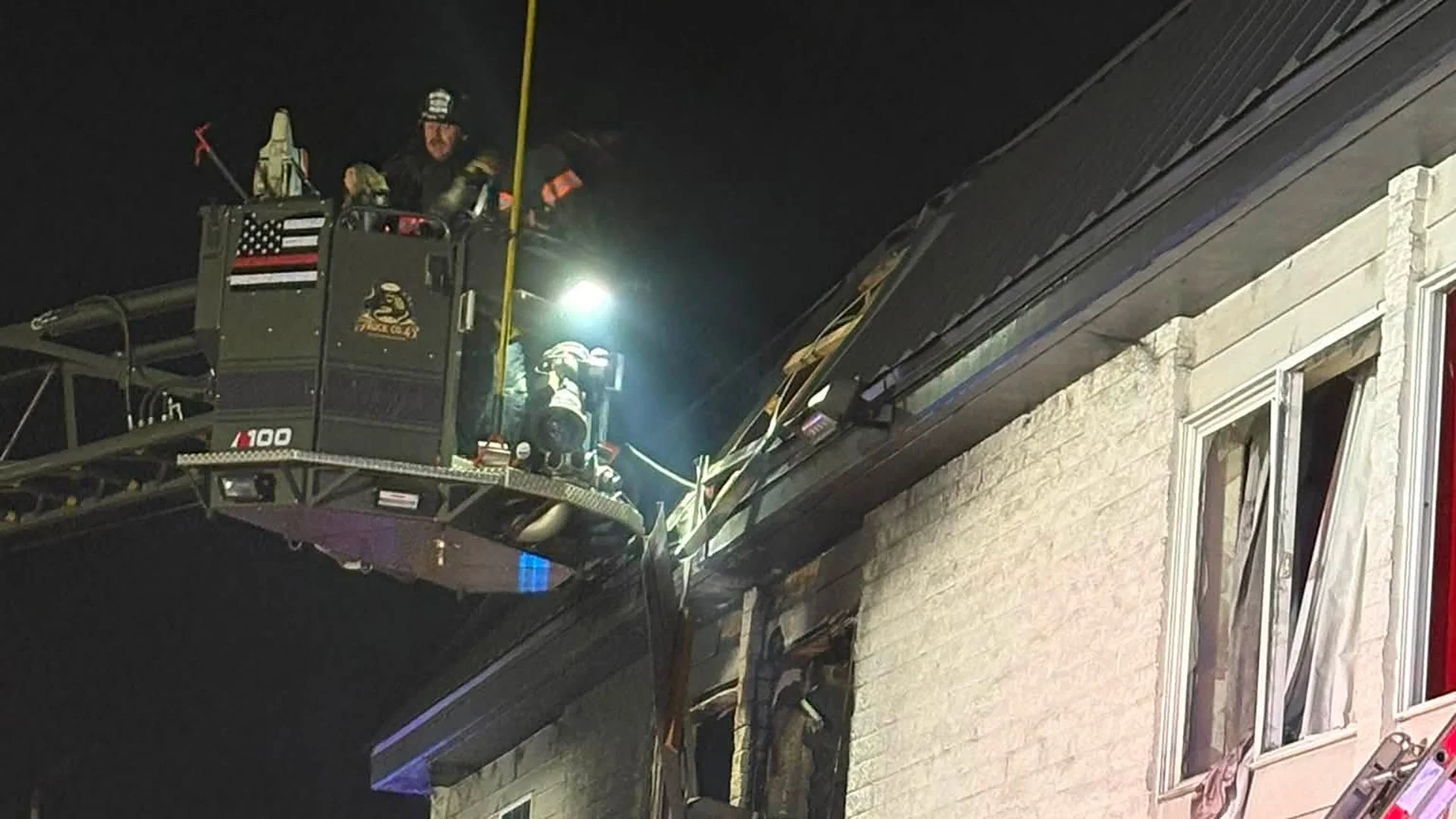
New Regional Emergency Radio System Goes Live Across Jackson County
The $28 million voter-backed project replaces aging radio infrastructure with a modern network connecting dispatchers and first responders across Southern Oregon.
AT A GLANCE
Go-live: Oct. 6, 2026
System: P25 Phase 2 hybrid VHF/700 MHz public safety radio network
Radio sites: 20 new or upgraded locations
Radios deployed: Nearly 1,700 to 1,800
Voter funding: $28 million bond approved in 2019
Coverage: Jackson County and portions of five surrounding counties
911 calls/texts: No change for the public
CENTRAL POINT, Ore. — A new public safety radio system years in the making is now fully operational across Jackson County, replacing aging communications infrastructure used by dispatchers and first responders throughout the region.
Emergency Communications of Southern Oregon, or ECSO 911, completed the final cutover to the new system Oct. 6 following years of planning, construction, testing, and equipment deployment.
The network connects ECSO dispatchers with law enforcement, fire, and emergency medical personnel in the field.


ECSO said the transition represents the culmination of years of work involving local emergency agencies, construction crews, technology providers, and funding partners.
“After years of planning, construction, and collaboration with our partner agencies, our first responders now have a robust, modern radio system designed to deliver reliable coverage across a wide and geographically challenging region,” ECSO said. “When seconds matter, reliable communications between dispatch and the field save lives.”
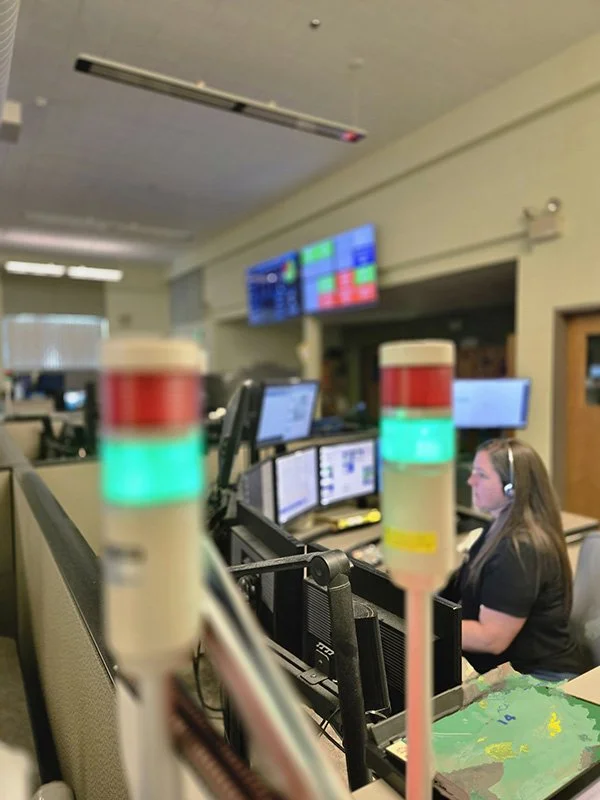

ECSO stressed that the project does not change how residents call or text 911. Instead, it replaces the radio network dispatchers and emergency crews use after those calls are received.
ECSO emphasized that the upgrade affects communications between dispatchers and first responders, not the public-facing 911 system. “It has no impact on the ability of citizens to call or text 911,” the agency said.
The new Project 25 Phase 2 system combines VHF and 700 MHz technology and was designed to improve coverage, capacity, interoperability, and reliability across a geographically challenging region.
Its coverage footprint includes Jackson County and portions of Josephine, Curry, Douglas, Klamath, and Siskiyou counties.
ECSO is the primary 911 answering center for all of Jackson County and Crater Lake National Park.
Replacing a Patchwork of Aging Systems
The new network replaces what ECSO described as a decades-old collection of analog and digital radio systems that had gradually evolved into a regional communications network.
Some components being replaced were more than 30 years old.
Over time, those systems developed coverage gaps, capacity limitations, interoperability problems, and increasing maintenance challenges as equipment aged.
The new system is intended to give agencies a common, more resilient communications platform for routine emergency calls as well as large incidents requiring multiple departments.
That becomes particularly important in Southern Oregon, where crews may be operating in urban areas, remote valleys, mountain terrain, or across county lines during wildfires and other regional emergencies.
The system allows agencies to maintain real-time voice communications during day-to-day operations, mutual aid responses, and major multi-agency incidents.
More Than a Decade in Development
The project traces its beginnings to 2014, when Jackson County Fire District 3 received a Department of Homeland Security grant to study public safety radio infrastructure throughout Jackson County.
Federal Engineering was brought in two years later to develop a conceptual design, eventually leading ECSO to select the hybrid VHF and 700 MHz P25 Phase 2 system.
Jackson County voters provided the financial foundation for the project in November 2019, approving a $28 million general obligation bond with 58 percent support.
ECSO contracted with Motorola Solutions in November 2020.
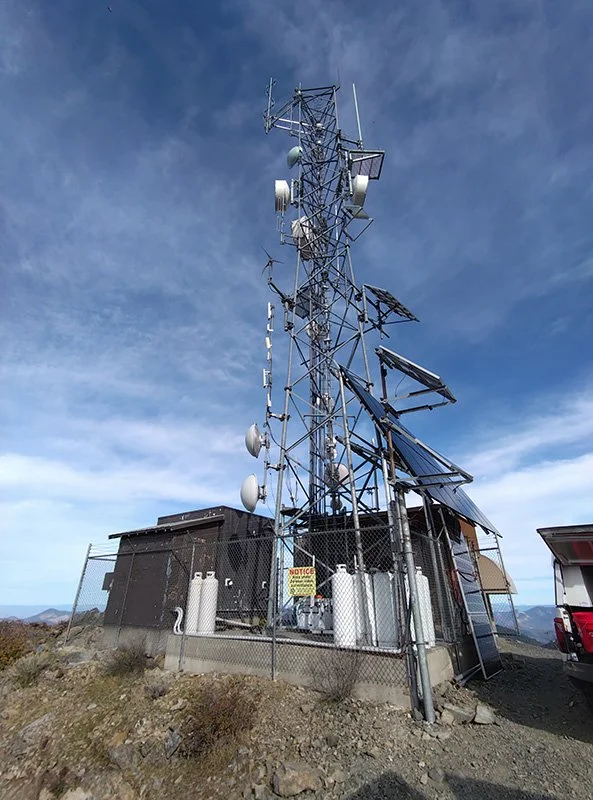
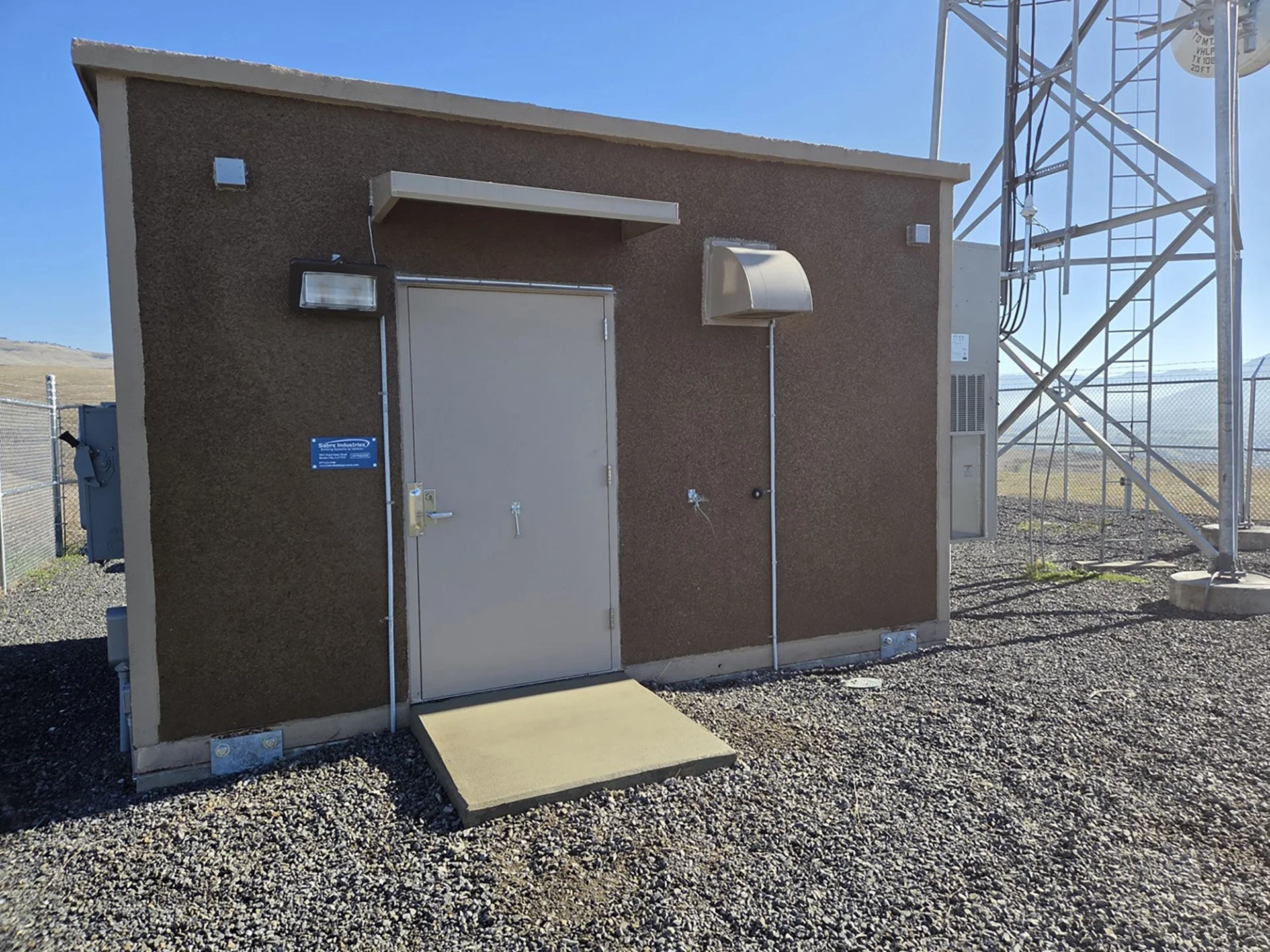
Construction began in 2023 on a network of 20 new or upgraded radio sites. That work was completed in 2025 and included solar power and battery systems at remote sites where traditional electrical service was unavailable.
Nearly 1,700 to 1,800 mobile and portable radios were also purchased, deployed, and installed for participating agencies.
After extensive testing and a period of parallel operation alongside the previous network, ECSO completed the transition to the new system Oct. 6.
Project Grew Along the Way
The final system extends beyond what was originally envisioned when voters approved the bond.
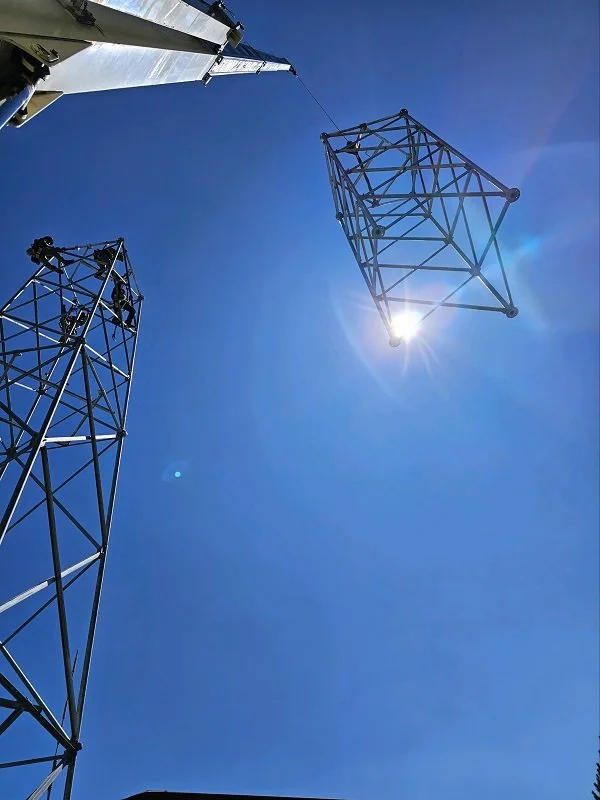
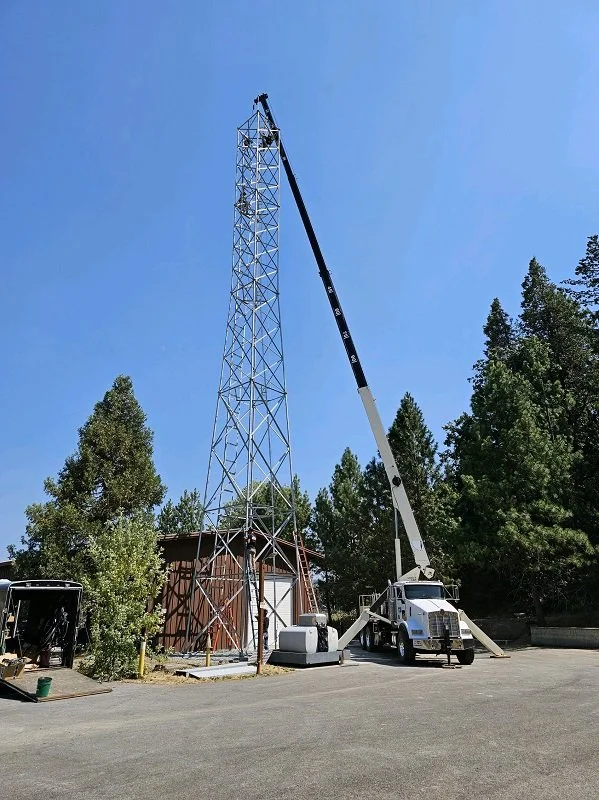
Smith Tower: Workers climb the Smith radio tower during construction and equipment installation for ECSO’s upgraded public safety communications system. Emergency Communications of Southern Oregon.
ECSO said participating public safety agencies requested additional technology and equipment as the project developed, expanding its capabilities and improving redundancy.
Additional funding came from several sources beyond the original $28 million bond.
That included federal grants, contributions from member agencies, partnerships with the Oregon Department of Transportation and Oregon State Police, and $2.5 million in funding secured through the Oregon Legislature.
The result is a regional network designed not only around current communication needs but around long-term reliability and future expansion.
Coordination continues with law enforcement and fire agencies as well as Jackson County Roads, Parks, and Animal Services as users transition fully onto the new system.
For residents calling 911, the process remains the same.
Behind the scenes, however, the radio connection between the dispatcher answering that call and the emergency crews responding to it has undergone one of the largest upgrades to Southern Oregon's public safety communications infrastructure in decades.
Editor’s Note: Jefferson Daily News has asked ECSO 911 for clarification on how the new radio system affects members of the public and media who monitor public safety communications with scanners, including whether existing equipment will continue to work and whether any radio traffic is no longer publicly accessible. This story will be updated if additional information is provided.

Keep Reading