Hungry Bears Push Deeper Into Ashland Neighborhoods
ODFW says poor berry production is sending black bears into new parts of town in search of food.
AT A GLANCE
Bear activity: Black bears are being reported across Ashland, including areas where sightings have been less common historically.
Why now: ODFW says poor berry production following a weak snowpack and limited spring rainfall has left bears searching for food.
What they’re finding: Residents have reported bears getting into garbage, backyard chicken coops, and other potential food sources.
What to do: Secure garbage, remove bird feeders, bring pet food inside, clean grills, and never feed or approach bears.
Report sightings: Ashland residents can use the city’s Wildlife Reporter to help track bear activity.
ASHLAND, Ore. — For some Ashland residents, the evening routine lately has included an unexpected visitor wandering through the yard, checking garbage cans, or passing between homes.
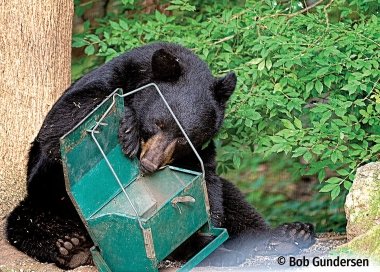
Easy Calories: A black bear investigates a bird feeder, one of several human food sources that can encourage bears to return to neighborhoods. Bob Gundersen / BearWise.
Black bears are showing up across parts of the city in unusually high numbers, and Oregon wildlife officials say hunger is driving them downhill.
The Oregon Department of Fish and Wildlife says mountain berries, an important late-summer food source for bears, are scarce or nonexistent in some areas following a poor winter snowpack and limited spring rainfall.
With less natural food available in the mountains, bears are increasingly searching Ashland neighborhoods for easier meals.
The timing is notable.


ODFW says the late-August activity is not simply the normal fall feeding period when bears begin consuming large amounts of food before winter. That seasonal behavior typically becomes more pronounced in September and October.
Instead, wildlife officials say bears appear to be entering town because natural forage has already become difficult to find.
And they are showing up in places where residents may not be accustomed to seeing them.
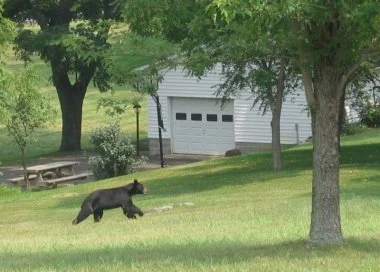
Neighborhood Visitor: A black bear moves through a residential area. ODFW says bears are appearing in more Ashland neighborhoods as natural food becomes harder to find. Oregon Department of Fish and Wildlife.
Historically, bear activity in Ashland has been concentrated largely along neighborhoods on the northwest side of town near the urban-wildland interface.
ODFW says recent reports have expanded into southern portions of Ashland and areas east of Interstate 5.
Ashland’s Wildlife Reporter map shows sightings scattered through neighborhoods across the city, with dozens of reports visible on the city’s tracking system. Recent residents have described bears moving through yards, repeatedly visiting neighborhoods, and searching for food.
Some encounters have gone beyond simply seeing a bear cross the street.
ODFW says it has received reports of bears getting into backyard chicken coops and rummaging through garbage.
For a hungry bear, those discoveries can quickly become habits.
The problem with an easy meal
BearWise Basics: Wildlife officials are urging residents to secure garbage, remove bird feeders, bring pet food inside, clean grills, and avoid feeding or approaching bears as activity increases around Ashland. Oregon Department of Fish and Wildlife / BearWise.
A garbage can, bird feeder, outdoor pet bowl, barbecue grill, or chicken coop can provide far more calories with far less effort than searching a mountainside for berries.
Once a bear learns that homes provide reliable food, wildlife officials say it may continue returning.
That creates problems for both people and bears.
ODFW is asking Ashland residents to remove those incentives before an occasional visitor becomes a regular one.
That means securing garbage and recycling, bringing bird feeders down while bears are active, feeding pets indoors, cleaning grills after use, and never intentionally feeding or approaching a bear.
BearWise guidance also encourages neighbors to tell one another when bears are active nearby so an entire neighborhood can reduce potential food sources at the same time.
Simply moving one trash can may not accomplish much if an unsecured food source remains a few houses away.

Living in bear country
Black bears are a normal part of Southern Oregon’s landscape, and seeing one does not necessarily mean there is an immediate danger.
The goal, wildlife officials say, is to keep bears from becoming comfortable around people or learning that neighborhoods are dependable places to eat.
Residents should give bears space and never approach them.
ODFW also recommends keeping dogs under control and making sure pets, livestock, and poultry are protected, particularly in areas where bears have recently been reported.
If a bear is repeatedly finding food around a home, residents should identify and remove whatever is attracting it rather than relying on attempts to simply scare the animal away.
The larger challenge is keeping a wild bear from becoming a food-conditioned bear.
BearWise guidance puts much of that responsibility on people: bears have adapted to living near communities, and avoiding conflicts requires residents to adapt as well.
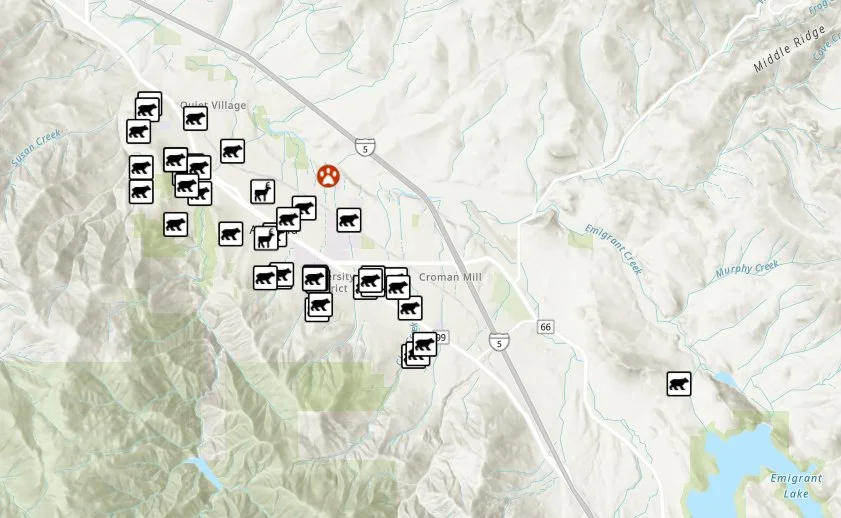
Ashland Bear Sightings: Reports submitted through Ashland’s Wildlife Reporter show bear sightings scattered across neighborhoods throughout the city, including areas east and south of where activity has traditionally been concentrated. City of Ashland Wildlife Reporter.
Reports help track where bears are moving
Ashland residents can report sightings through the city’s online Wildlife Reporter, which maps wildlife activity around the community.
The reports do not necessarily represent individual bears. The same animal can be seen and reported multiple times as it moves through different neighborhoods.
But taken together, the sightings provide a picture of where bear activity is occurring and how far animals are moving into developed areas.
For now, wildlife officials expect bears to continue searching for calories wherever they can find them.
In a year when the mountains are offering less food than usual, that may increasingly mean Ashland backyards.
And the easiest way residents can help send those bears back toward wild food is to make sure there is nothing worth coming back for.
Cover Photo / Trash Trouble: A black bear gets into garbage, an easy food source wildlife officials say can quickly teach bears to associate homes with meals. Oregon Department of Fish and Wildlife.

Keep Reading