Oregon lawmakers cite safety hazards and the need for modern fuel infrastructure to support Kingsley Field's F-35A mission.
AT A GLANCE
Location: Kingsley Field, Klamath Falls
Request: Expedite construction of new jet fuel facilities
Lawmakers: Senators Jeff Merkley and Ron Wyden; Representative Cliff Bentz
Existing Facilities: Built in 1958 with no major upgrades
Safety Concerns: More than 60 electrical code violations, flooding, and explosion hazards
Proposed Improvements: New fuel receiving pump house and truck resupply point
Anticipated Start: First quarter of fiscal year 2027 (October–December 2026)
Future Mission: F-35A Lightning II Fighter Training Unit
Annual Economic Impact: $232 million, according to the lawmakers
KLAMATH FALLS, Ore. — Oregon's U.S. Senators Jeff Merkley and Ron Wyden, alongside U.S. Representative Cliff Bentz, are urging the Defense Logistics Agency (DLA) to expedite construction of new jet fuel facilities at Kingsley Field, citing serious safety concerns and the need to support the base's future flying missions.
In a bipartisan letter dated November 23, 2026, addressed to DLA Director Lieutenant General David J. Sanford, the lawmakers expressed concern over deteriorating infrastructure that has gone without major upgrades for nearly seven decades.
“Currently, the jet fuel facilities are non-compliant, unsafe, and unable to support future flying missions. These facilities were originally built in 1958 and have received no major upgrades since.”
According to the letter, the existing facilities violate numerous Department of Defense, environmental, and building regulations, including more than 60 documented electrical code violations.
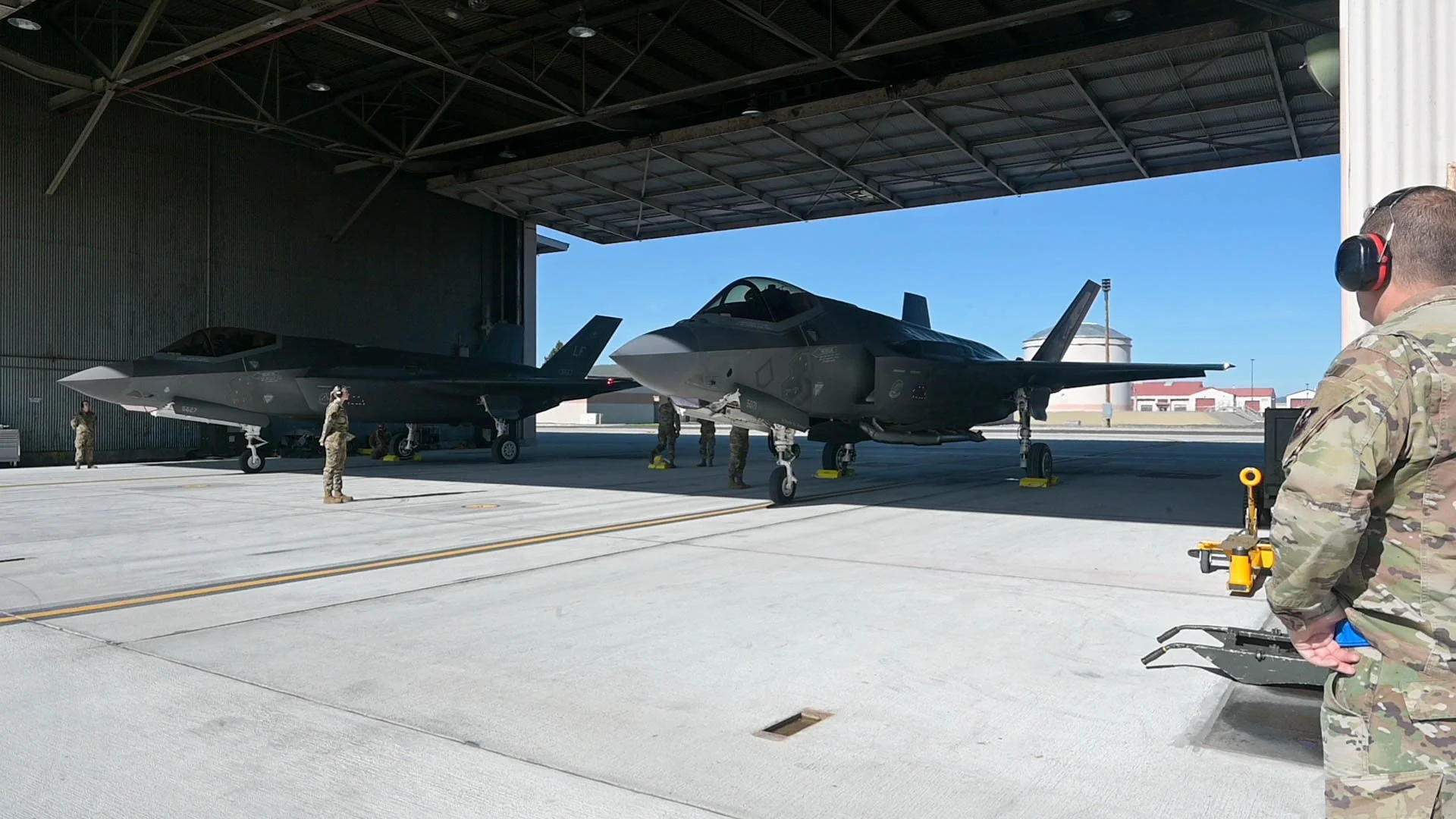
F-35A Lightning II at Kingsley Field: Two F-35A fighter aircraft sit inside a hangar at Kingsley Field in Klamath Falls, with one of the base's fuel storage tanks visible in the background. Oregon lawmakers are urging the modernization of aging fuel infrastructure to support the base's future F-35A training mission. File photo: U.S. Air Force / Senior Airman Jakob Hambright.
The existing fuel receiving pump house frequently floods, creating potential electrocution and explosion hazards. Current fuel offloading operations also place commercial fuel trucks within 200 feet of operating aircraft parking aprons without physical protection, raising additional security concerns.
“Kingsley Field has relied on temporary fixes after more than 35 years of deferred maintenance. These hazardous and unpredictable working conditions are unacceptable for our Airmen and negatively impact the 173rd Fighter Wing’s ability to remain mission capable.”
The proposed project includes construction of a new, fully compliant jet fuel receiving pump house and a reliable truck resupply point. The improvements would support Kingsley Field's new F-35A Lightning II Fighter Training Unit.
According to the letter, the U.S. Army Corps of Engineers will execute the project, with DLA currently pursuing contracting arrangements. Construction is expected to begin during the first quarter of federal fiscal year 2027, which runs from October through December 2026.
While welcoming that progress, the lawmakers are pressing the agency to maintain its schedule and avoid further delays.
“We strongly urge DLA to expedite the contracting process and execute this project on schedule, without further delay,” the lawmakers wrote.
Beyond its military mission, Kingsley Field remains a significant economic driver for the Klamath Basin.
According to figures cited in the letter, the base is Klamath County's largest employer, generating an annual economic impact of $232 million, supporting more than 3,000 jobs, and accounting for an annual payroll of $85 million.
Merkley, Wyden, and Bentz have requested an update on the project's status, its position among DLA's construction priorities, and whether additional congressional support is needed to ensure timely completion.
“Our Airmen and the Klamath Falls community deserve facilities that meet basic safety standards,” the lawmakers wrote.

Keep Reading