Kingsley Field Cleared for F-35s, First Jets Expected Summer 2027 (UPDATED)
UPDATED: Oct. 5, 2026, 8:27 p.m.
The Air Force’s final basing decision clears the 173rd Fighter Wing to begin preparing for a 26-aircraft F-35A training mission at Kingsley Field.
AT A GLANCE
Decision: Air Force Secretary Troy Meink signed the final Record of Decision authorizing the F-35A mission at Kingsley Field.
Aircraft: 26 F-35A Lightning II jets
First arrivals: Summer 2027
Mission: Train F-35 pilots for operational Air Force units
What happens next: Construction, infrastructure modernization, maintenance preparation, and development of F-35 training programs
Transition: The changeover will take place over multiple years as Kingsley Field builds out its new F-35A training mission.
“Kingsley Field is officially an F-35 base, securing its place at the forefront of American airpower for generations to come.”
KLAMATH FALLS, Ore. — Kingsley Field has received formal authorization to move ahead with a 26-aircraft F-35A Lightning II training mission, clearing the way for construction, modernization, and preparations ahead of the first jets expected to arrive in summer 2027.
U.S. Rep. Cliff Bentz announced Monday that Secretary of the Air Force Troy Meink signed the Record of Decision for the F-35A mission at Kingsley Field, home of the Oregon Air National Guard’s 173rd Fighter Wing.
The 173rd Fighter Wing later confirmed that the official basing decision calls for 26 F-35A Lightning II aircraft to be based at Kingsley Field.
The decision represents the final authorization needed for the base to move ahead with preparations for the new aircraft after years of planning and environmental review.
Kingsley Field was previously selected as the preferred location for the Air Force’s next F-35A formal training unit, but that selection was contingent on completion of the environmental process and a signed Record of Decision.
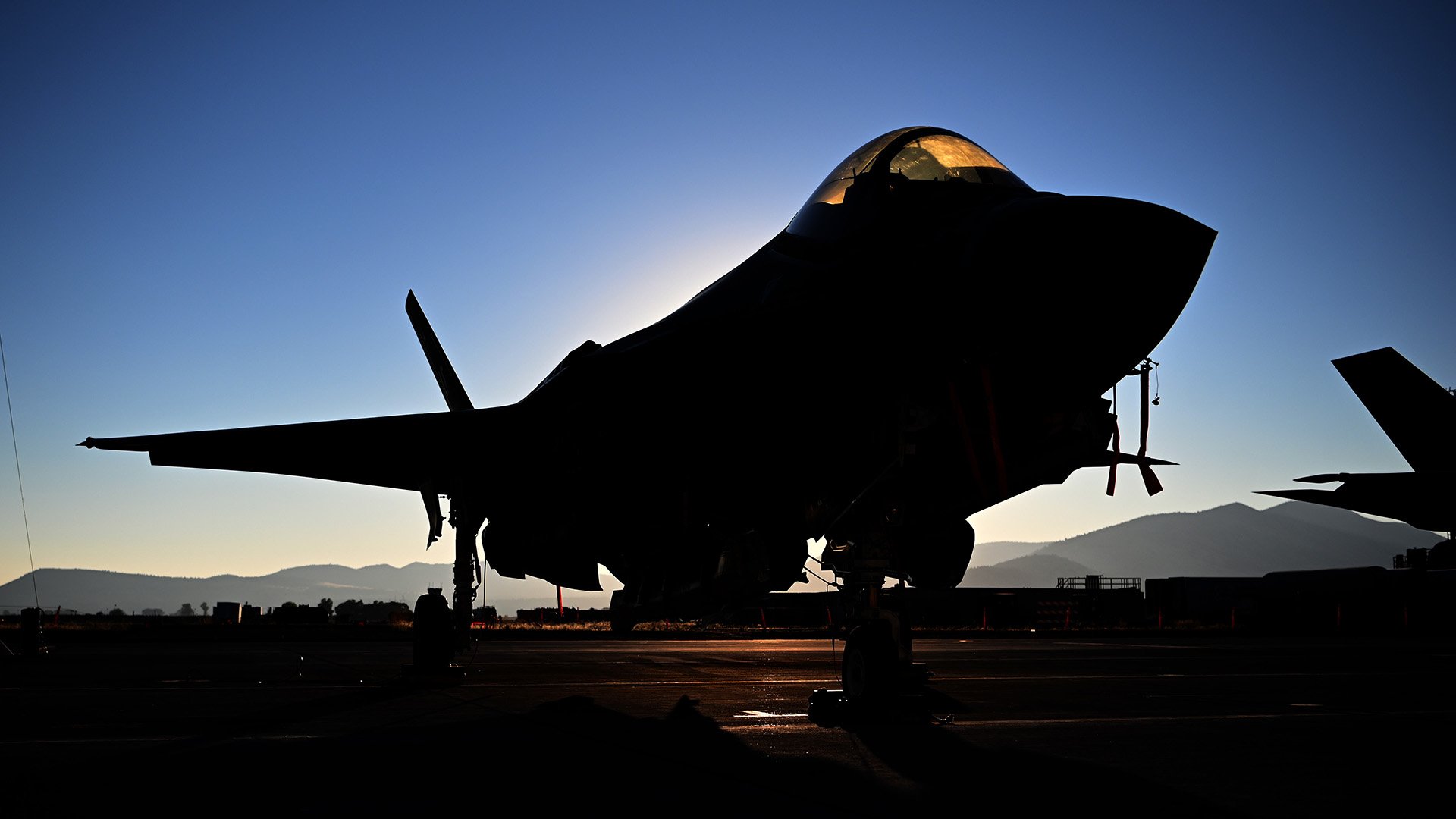
F-35s at Kingsley Field: Airmen prepare two U.S. Air Force F-35A Lightning II aircraft from Luke Air Force Base for launch at Kingsley Field during training with the 173rd Fighter Wing in May 2023. U.S. Air Force photo by Senior Airman Jakob Hambright.
With that decision now signed, the transition moves into construction and implementation.
“This is a historic day for the 173rd Fighter Wing, and the Klamath Basin,” Col. Adam Gaudinski, commander of the 173rd Fighter Wing, said. “Twenty-six F-35s will call Kingsley Field home, and with them comes a mission of national importance.”
The F-35A is the conventional takeoff and landing version of the Joint Strike Fighter and incorporates stealth, advanced sensors, networking, and weapons systems designed for operations in contested environments.
At Kingsley Field, the aircraft will support the wing’s longstanding fighter pilot training mission.
The 173rd Fighter Wing said pilots trained at Kingsley will take their F-35 experience to operational units throughout the Air Force, making the Klamath Falls base part of the service’s broader effort to produce qualified F-35 pilots.
“We are not simply receiving a new aircraft; we are taking on a mission that directly affects the Air Force’s ability to put combat-ready F-35 pilots into operational units,” Gaudinski said.
Preparing Kingsley Field for the new mission will require substantial changes across the installation.
The wing said construction and modernization will include infrastructure, maintenance operations, training programs, and other facilities needed to support the aircraft and the personnel responsible for operating and maintaining them.
The transition is expected to take place over multiple years. The wing will continue supporting its current responsibilities while personnel, facilities, and training programs are prepared for the F-35A fleet.
The 173rd Fighter Wing also expects the transition to generate economic activity across Southern Oregon as construction projects bring additional personnel, equipment, parts, and other resources to Kingsley Field.
Bentz similarly described the basing decision as significant for both Kingsley Field and the Klamath Basin economy.
“The decision by Air Force Secretary Meink is extraordinarily good news for Kingsley Field, Klamath Falls, the State of Oregon, and our nation,” Bentz said.
He pointed to the extensive military training airspace across Southern and Eastern Oregon as an important part of Kingsley Field’s role in fighter pilot training.
The F-35A represents the next chapter in a training mission long associated with the F-15C Eagle at Kingsley Field.
Gaudinski said that although the aircraft is changing, the underlying mission remains centered on developing fighter pilots and Airmen for operational units.
“The Eagle built a legacy here that we will always be proud of,” Gaudinski said. “But our mission has never been about a particular aircraft. Our mission is to develop Airmen and fighter pilots who can deliver airpower when the nation needs it.”
The first F-35A Lightning II aircraft are expected to arrive at Kingsley Field in summer 2027 as the base begins building toward its full 26-aircraft training mission.
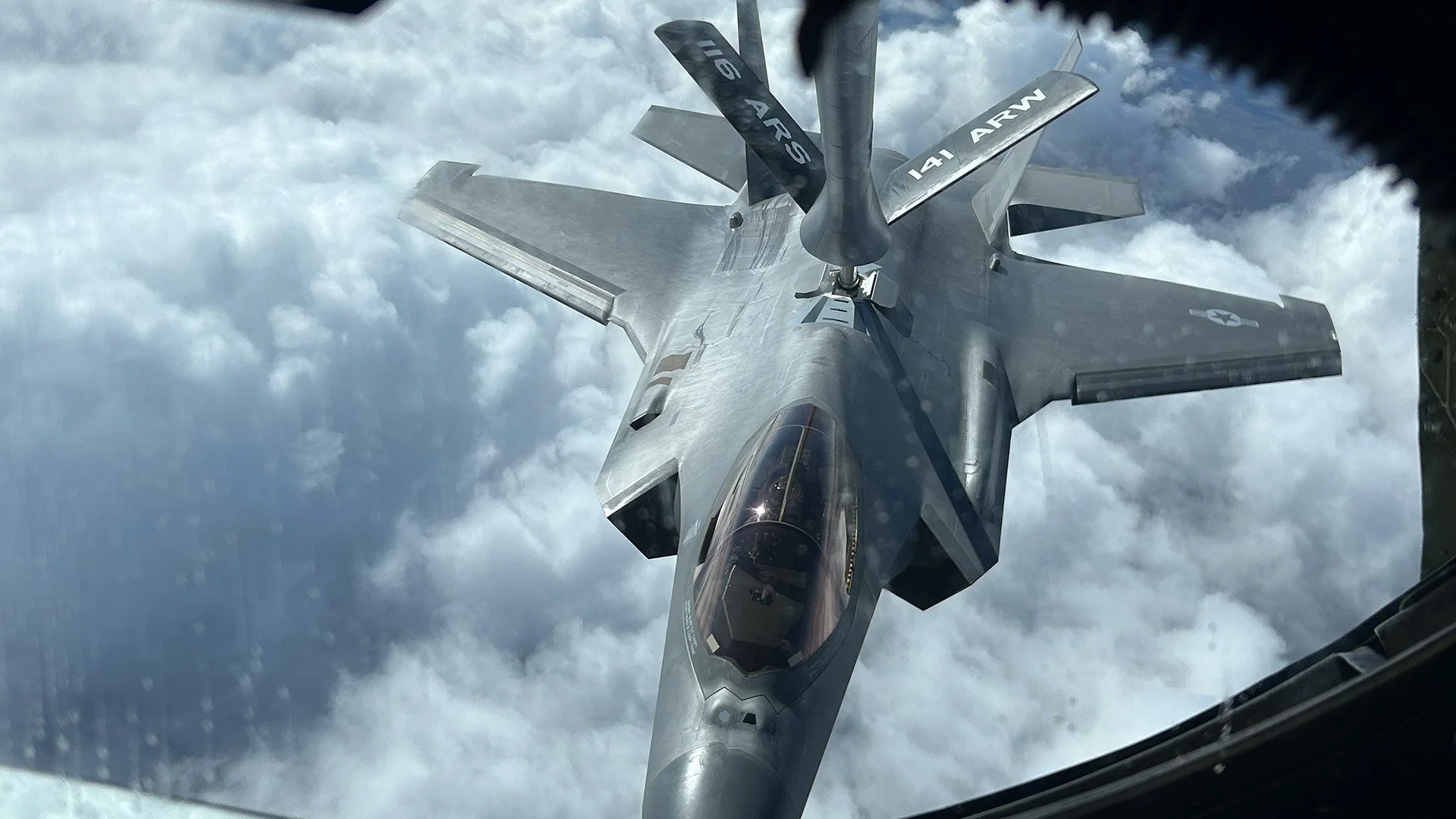
Cover Image / F-35 Refueling Over Southern Oregon: A U.S. Air Force F-35 Lightning II from Luke Air Force Base refuels from a KC-135 Stratotanker during an April 7, 2025, training mission out of Kingsley Field in Klamath Falls. U.S. Air National Guard photo by Lt. Col. Nikki Jackson.

Keep Reading