Conceptual drawings show a ballpark replacing most existing park uses as Medford’s $500,000 feasibility study moves forward.
AT A GLANCE
New plans: Conceptual drawings provide the clearest look yet at a Hawthorne Park minor league stadium.
Park impact: The filing says existing park improvements and uses would be replaced except for the Growers and Crafters Market.
Possible uses: Baseball, youth tournaments, concerts, festivals, civic events, restaurants, and the market.
Study: Medford and the Eugene Emeralds are each contributing $250,000 toward the $500,000 feasibility and design work.
Alternative: Harry & David Field is also being evaluated.
Next step: Technical review is scheduled Sept. 23, with the broader stadium study expected around mid-October.
Vicinity Map: The City of Medford identifies the 12.8-acre Hawthorne Park property being studied as a potential site for a minor league baseball stadium. City of Medford Planning Department.
MEDFORD, Ore. — A possible minor league baseball stadium at Hawthorne Park is beginning to move from an idea on paper toward something residents can actually picture.
New documents filed with the City of Medford Planning Department (below) provide one of the clearest looks yet at how a stadium could fit into Hawthorne Park — including a baseball field, grandstands, concourses, a press and premium level, team facilities, concessions, service areas, and other infrastructure.
They also make clear how dramatically the project could change the park that exists today.
The filing states that, with the exception of the Rogue Valley Growers and Crafters Market, the proposed stadium facility would replace Hawthorne Park’s existing improvements and uses.
Today, Hawthorne Park includes a playground, skate area, splash pad, basketball and futsal courts, two off-leash dog areas, open lawn, picnic areas, and other public amenities.


None of that means a stadium has been approved.
The drawings are part of the city’s ongoing feasibility work to determine whether a professional baseball stadium at Hawthorne Park can actually be built, what it could cost, and what hurdles would have to be cleared before city leaders decide whether to move forward.
Conceptual Stadium Layout: A preliminary site plan shows how a minor league baseball stadium and supporting facilities could fit within Hawthorne Park. The concept remains under study and is not a final or approved design. City of Medford Planning Department.
A first look at the ballpark
The conceptual site plan, dated Aug. 26, shows the field occupying much of the Hawthorne Park project area, with stadium seating and structures clustered around the infield.
The plans identify space for concessions, restrooms, administrative offices, a team store, guest services, team and event operations, storage, field maintenance, and secured areas for players and staff.
A separate cross-section offers an early look at the stadium’s vertical profile. Lower seating rises from field level toward a main concourse, with additional seating above and a premium level containing a club lounge, press box, and group area. A canopy extends over the upper portion of the structure.
The current planning packet does not give a final seating capacity.
Earlier concepts reviewed by the City Council envisioned 3,992 seats, including 2,392 fixed seats. Those preliminary designs were estimated by two local contractors at an average of about $86 million, but city leaders said they needed substantially more engineering before treating that figure as reliable.
That is part of what the city is paying to learn now.
Stadium Cross-Section: A conceptual cross-section shows the potential stadium’s seating, main concourse, premium and press level, patron services, and overhead canopy. The drawing is part of Medford’s preliminary feasibility work. City of Medford Planning Department.
More than a baseball stadium
The planning application describes the project as a “recreation and leisure facility,” not simply a ballpark.
In addition to minor league baseball, the stadium could host youth sports tournaments, outdoor concerts and festivals, civic events, small-scale restaurants, and the Growers and Crafters Market.
That broader use is central to the city’s argument for studying Hawthorne Park.
The stadium discussion grew out of Medford’s larger Creekside Quarter concept, which has envisioned new development around Bear Creek and downtown, including a hotel, conference and event center, commercial uses, and a professional baseball facility.
City leaders have identified Hawthorne Park as the preferred stadium location because it sits within the urban renewal area and could potentially generate more activity around downtown businesses and Bear Creek.
The Eugene Emeralds entered that conversation after approaching Medford about a possible move from Eugene. The club has been searching for a long-term stadium solution capable of meeting current Minor League Baseball facility standards.
The $500,000 question
Jefferson Daily News reported in June that the City Council approved a consulting contract of up to $500,000 to take the stadium study to the next level.
Medford is contributing $250,000 through the Medford Urban Renewal Agency, while the Eugene Emeralds are contributing the other $250,000.
KNO Construction, working with DLR Group, is studying two possibilities.
One is a new stadium at Hawthorne Park.
The other is whether the existing Harry & David Field at Lithia & Driveway Fields could be upgraded into a Minor League Baseball-compliant facility.
The Hawthorne work is expected to produce an approximately 10% design along with a more detailed construction cost estimate. The Harry & David Field study will focus on cost and viability.
The city expects the broader work to be completed around mid-October, after which staff will bring the findings and a recommendation back to the City Council.

Why this planning filing matters
Before the city can seriously consider building at Hawthorne Park, it needs to know whether the concept works under Medford’s development rules and what problems could emerge.
That is the purpose of the new pre-application filing.
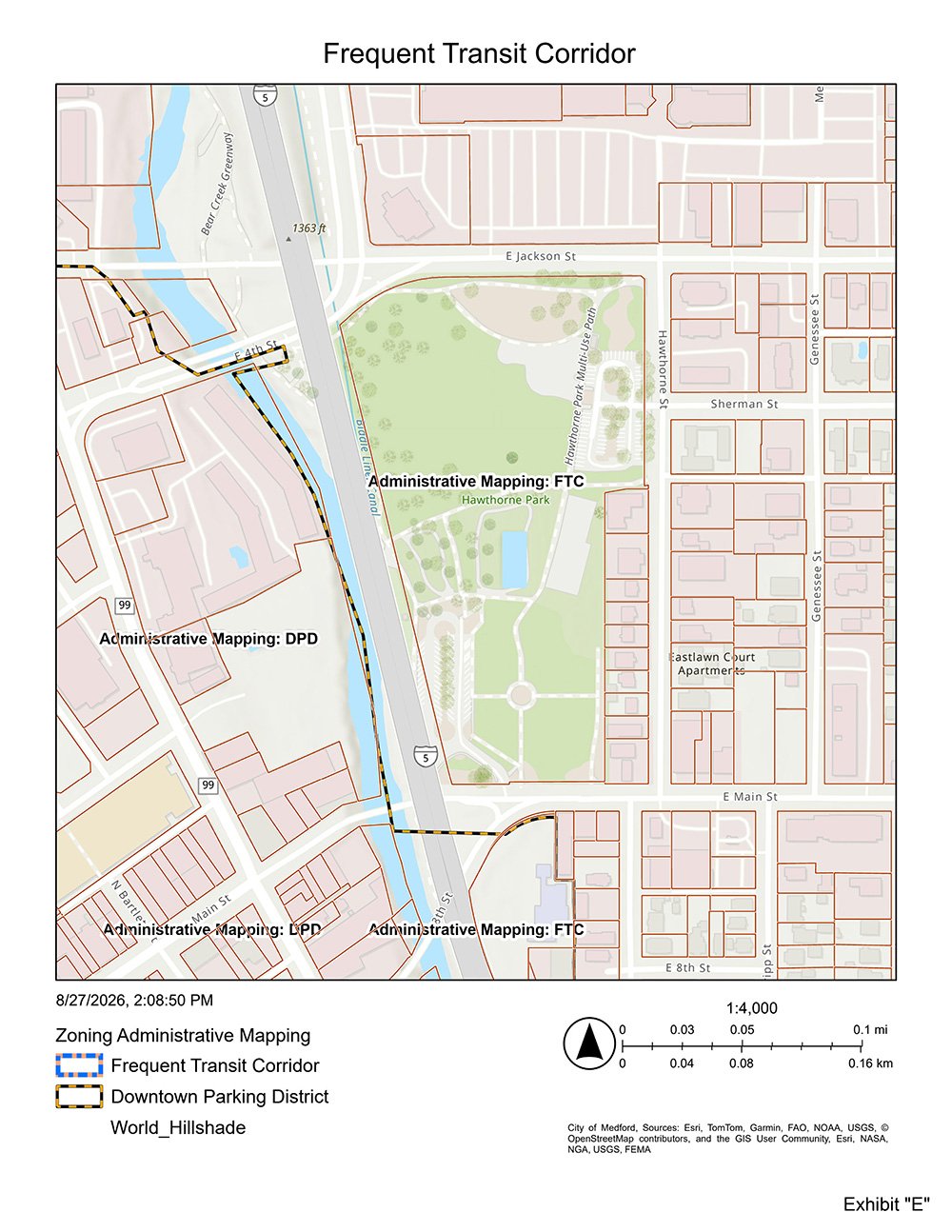
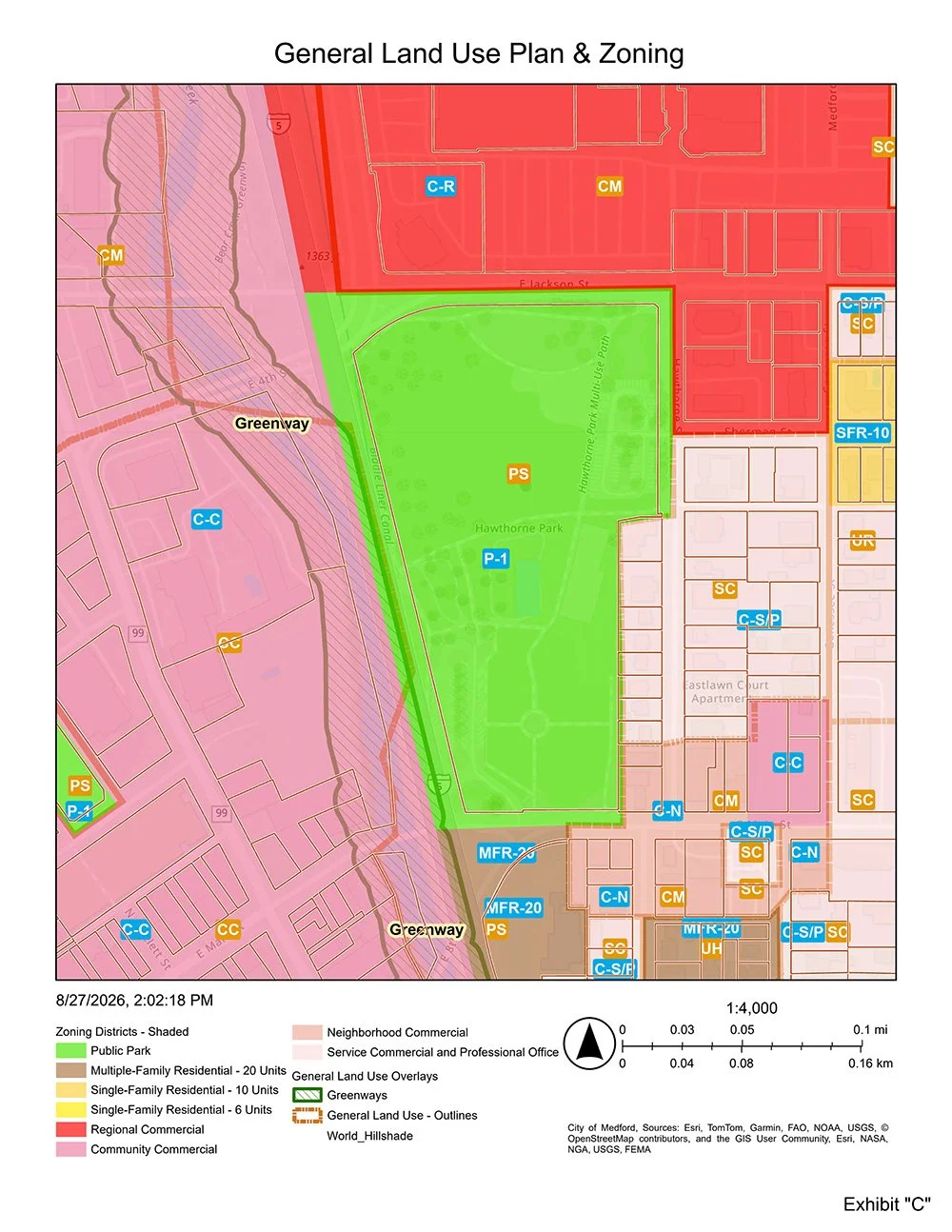
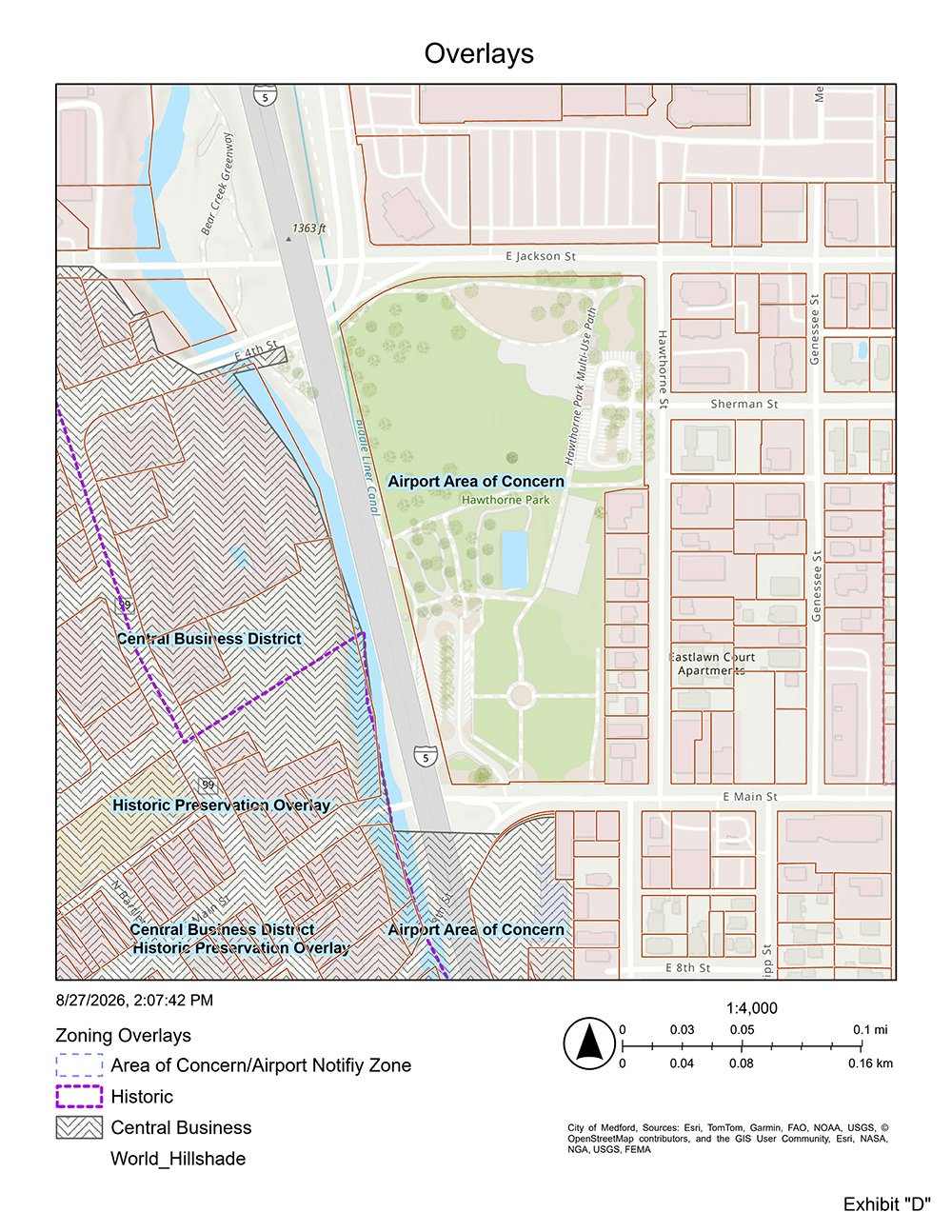
Hawthorne Park is zoned P-1 for public parks. The application says the proposed recreation and leisure facility is an allowed use within that zoning, although additional park development and/or site and architectural review would be required. The property is also within an Airport Area of Concern and along a Frequent Transit Corridor.
The city has now circulated the proposal to departments, utilities, transportation agencies, and other organizations for technical review.
A Land Development Committee meeting is scheduled for Sept. 23.
That review is not a vote on the stadium. Its purpose is to identify requirements, conflicts, infrastructure needs, and other issues that would have to be addressed if the project advances.
What we still don’t know
For all the additional detail in the new drawings, some of the biggest questions remain unanswered.
There is no final stadium design or final construction price. A financing package has not been approved. The Emeralds’ eventual contribution toward construction remains unresolved. The current concept does not establish a final spectator parking plan, and there is no construction timeline.
Most importantly, Medford has not decided to build the stadium, and there is no finalized agreement relocating the Eugene Emeralds to Southern Oregon.
Those decisions come later.
What has changed is that residents can now see much more clearly what the Hawthorne Park option means.
The stadium is no longer represented only by a price estimate or a discussion at City Hall. The latest plans begin showing the footprint, the facilities, and the tradeoff that would come with choosing Hawthorne Park: turning much of an existing downtown public park into a multi-use professional baseball and event venue.
RELATED
June 5, 2026: Medford Council Approves $500K Baseball Stadium Study

Keep Reading